Four Ways to Make a Test Teach
A bank reconciliation test can end at the mark. Four moves before, after and between tests turn it into practice.
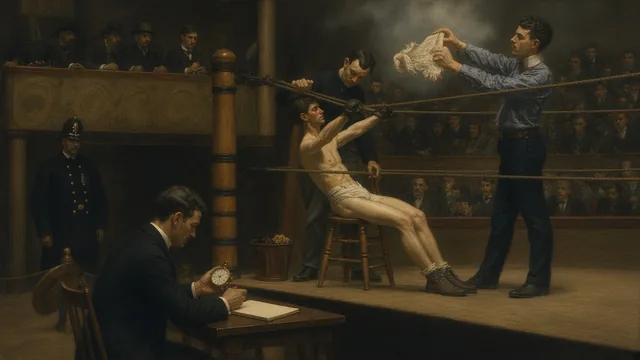
The Friday bank reconciliation test comes back marked 14 out of 20. The statement says $4,600 and the cash book says $5,050.
One student subtracts the $450 outstanding cheque, which is right, but she subtracts the $900 deposit in transit too. She reaches $3,250 and the sides never meet.
Her lecturer writes "check the timing items" in red. The student files the paper, and a new topic starts on Monday. Fourteen weeks later the same $900 turns up in the final exam, and she subtracts it again. The Friday test measured something, yet it taught almost nothing.
Swan Sein, Rashid, Meka, Amiel and Pluta wrote a twelve-tips review of assessment for and as learning. It treats a test as one point in a cycle, with learning before the test, during it and after it (p. 302).
"Assessment for learning" means using tests to help students learn. "Assessment as learning" hands the student the controls: she plans and monitors her own learning, for example by writing why she added the $900 deposit rather than waiting for the red ink. The review describes this as placing "ownership over learning in the role of the student" (p. 302).
Four moves show both, using one reconciliation test, and each ends with something you can do in your own class. None needs new software or a new syllabus, only a different use of papers you already set.
Before: hand out the map
Students learn about a test before it starts, the review says: "exam blueprints or practice tests" direct them "about what to study and learn" (p. 302). In our usage, a blueprint is a one-page list of what the test will contain.
We'd write ours in accounting terms: "Question 1: bank reconciliation, 8 marks. Find the timing items, adjust the correct side and agree the two balances." That way our student knows the deposit in transit is coming.
We'd hand the map out a week ahead and run Question 1 as a ten-minute practice, so students see the marks before they see the paper.
During the week: redo it from memory
The review suggests a weekly rhythm. Problem sets are "worked on early in a week", and students then "complete the problem set from memory at the end of the week" (p. 302).
Behind that rhythm is the testing effect, the learning that comes from pulling an answer out of memory. Retrieval practice "enhances the storage and ability to retrieve information at a future time" (p. 302).
The review argues that frequent low-stakes assessment is more likely than infrequent high-stakes assessment to promote learning and to discourage "gorge and purge" (p. 302).
Treat that as the review's claim, though. Two accounting studies in "Six Tests Instead of Three" found no significant final-exam difference from six tests instead of three or from group quizzes. In the income tax course, the six-test sections did score higher on the class tests themselves.
In our class the rhythm would look like this. On Monday the class works one reconciliation with the notes open, and on Friday the students close the notes and redo it from a blank layout. We'd keep that redo ungraded, so a wrong answer costs a student nothing but ten minutes.
Friday's redo can use new figures: statement $7,200, deposit in transit $1,500, outstanding cheque $300. That gives an adjusted bank balance of $8,400, so a student who reaches $5,400 has made the same slip again, and now it shows within the week.
We'd also let the redo mix in one question from an earlier topic, such as a month-end accrual. Problem sets can "interleave content from across topics", the review notes (p. 302).
After: retake with a reason
The review's retake idea answers the red ink. Students retake an exam they have not mastered, but must also "provide explanations of the answers to each question". At re-grading, "students can be given credit only if the question explanation is also correct" (p. 304).
We'd shrink that to the question each student missed. Our student redoes Question 1, and beside each timing item she writes a reason: "Add $900: the bank has not yet recorded money we already banked." Copying the right figure earns nothing.
A reason such as "the bank has not recorded it yet" scores, while "Because that is the rule" does not.
Then she keeps her own error list and adds a line: "Deposit in transit: add to the bank balance." The review says "focusing on errors can be a powerful driver of learning" (p. 302).
Timing of feedback matters differently for low and high stakes. On low-stakes work, delay can let students keep "working through the problem until they find the correct answer". On a high-stakes test, though, "wrong answers may be learned and reinforced" without prompt feedback (p. 304).
So we'd return Friday's redo with one hint only: "a timing item sits on the wrong side." The real test, by contrast, we'd return marked within the week.
A worked reconciliation helps too, but only after students have tried alone. The review recommends "worked exemplar responses once they work to answer questions independently". It also reports evidence that explanation feedback beats a bare correct answer (p. 304).
Later: bring it back
A test on the latest unit can hide what has been forgotten. The review warns that non-cumulative feedback can give students an "illusion of competence", because nobody knows how well the understanding will last (p. 302).
Its answer is to let "content to appear on multiple exams over time in a variety of forms". Students also work to keep content available "if they expect a cumulative exam" (p. 302).
For us that is a four-mark reconciliation on Test 4, with new figures and one change: the cash book is now the starting point. The student who once subtracted the $900 deposit meets a deposit in transit again, but this time the topic is no longer fresh.
Starting from the cash book, the deposit in transit comes off, which means her line "add to the bank balance" no longer works. Test 4 checks whether she understands the timing, not whether she remembers the old fix.
We'd tell the class in week 1 that old topics return. We can't promise she gets it right in week 14. What changes is that by then she has met the same timing item four times, each time with a different job to do.
Before you try this
Do not add all four at once. Marking reasons takes longer than marking figures, so start with one question on one test, and tell students that the explanation, not the figure alone, earns the retake marks. Before you mark, agree with a colleague what counts as a correct reason.
Try this in class next week
- A week before a test, give students a one-page map of each question's topic and marks, so they know what to practise.
- On Friday, ask students to redo Monday's problem with notes closed and ungraded, because recalling an answer is the practice.
- Let students retake the question they missed and give marks only when the written reason is right, so a copied figure earns nothing.
- Put one old question with new figures on a later test, so earlier work stays in use.
Editorial material: our accounting adaptation of Tips 6, 7 and 11.
After you try it, ask yourself…
- After a marked test, what do students do with the question they got wrong?
- Which topic in your course is tested once and never seen again?
- Could you mark a one-sentence reason for an answer as easily as you mark the figure?
About the evidence: studies, limitations and sources
About the evidence
The lecturer, student and figures are fictional editorial illustrations.
Swan Sein, Rashid, Meka, Amiel and Pluta (2021) wrote a Twelve Tips guide for medical schools. It rests on a literature review and on experience across eight medical schools (p. 300), but it reports no new classroom data.
The review is guidance, not a classroom trial, and it calls evidence-based assessment systems "an area in need of further consideration and study" (p. 304). Treat the four moves as things to try and watch.
We built four moves on three of the twelve tips: the blueprint and the weekly redo (Tip 6), cumulative assessment (Tip 7) and the explained retake (Tip 11).
We also quote single lines from Tips 4, 5 and 12 (pp. 302 and 304). We have not read the studies the guide cites.
The bank reconciliation examples, the Friday timing, the ungraded redo, the shrunken retake and the error list are our untested adaptations. The guide covers pre-clinical knowledge exams, so tips on honour codes, coaching and pass/fail grading are left out.
- Evidence label
- Narrative review
- Source type
- Guidance
- Design
- Twelve Tips guidance paper · medical education · no new data
- What we read
- Full text
- Works for
- Any size; explanation marking needs capacity
- Time to try
- Our estimate: 10 min a week for the redo; marking time extra
- Level
- Any year
Swan Sein, A., Rashid, H., Meka, J., Amiel, J., & Pluta, W. (2021). Twelve tips for embedding assessment for and as learning practices in a programmatic assessment system. Medical Teacher, 43(3), 300–306. Read the paper (doi.org) · What we read: full text, version of record (published online 13 July 2020).
Get next week's ideas in your inbox.
Four evidence-based reads for accounting lecturers, every Friday. Confirm by email; unsubscribe any time. Prefer feeds? RSS.